Do You Prune Roses at Homes and Businesses?
Yes, we prune roses at houses, HOA common areas, apartment communities, churches, offices, and retail properties. Tell us the property type and roughly how many rose bushes there are.
Rose Pruning Kings provides rose pruning, climbing rose pruning, and Knock Out rose cutback services in the Mulberry, GA area for both residential and commercial properties, from a few bushes by the porch to long beds along a parking lot. Contact us now for a free estimate.
Rose pruning in Mulberry, GA costs anywhere from $90 to $300 on average for a typical home bed of 5 to 10 rose bushes. The price depends on the number and size of the bushes, the type of rose, how overgrown they are, climbers tied to trellises or arches, disease, and whether the clippings are hauled away.
Yes, we prune roses at houses, HOA common areas, apartment communities, churches, offices, and retail properties. Tell us the property type and roughly how many rose bushes there are.
Yes, we cover the Mulberry, GA area. Send us the property address and we'll confirm.
We prune repeat bloomers in late winter to early spring, as the buds start to swell and about when forsythia blooms. Once-blooming roses and most old climbers get pruned right after they flower in late spring or early summer.
No, but once the leaves are fully out we keep it to light shaping and taking out dead or damaged canes, since a heavy cut late in spring can delay or reduce the first flowers.
No, not hard. Fall pruning pushes tender growth that winter kills. In windy or snowy areas we may shorten very tall canes so they don't whip and break, and leave the real pruning for spring.
We can usually come within a week or two. Late winter and early spring is our busiest window, so book a few weeks ahead if you want the main cutback done on time.
Yes, we can put you on a yearly schedule for the main spring pruning, with light summer visits for deadheading and a post-bloom visit for any once-blooming climbers.
We need the address, how many rose bushes you have, their rough height, and the variety if you know it. Photos help, especially of climbers on fences, arches, or walls.
No, as long as we can get to the beds and any gates are unlocked. If you want certain bushes kept taller or left alone, mark them or tell us before the visit.
Yes, we can confirm the scope, schedule, and access with an HOA board, property manager, or landscape contact. Tell us who approves the work and who gets the quote.
Yes, we confirm the price before we start. If we find something unexpected, like a diseased plant that should come out, we talk to you before doing any extra work.
Yes, the total goes up with each bush, but we can usually lower the per-bush price when there are many on one property. Big neglected bushes and tall climbers cost the most per plant.
Most home rose beds are finished in a single visit of a few hours, including cleanup. Large commercial beds or a wall of tangled climbers can take a full day.
Yes, we prune Knock Out roses once a year in late winter or early spring. Established bushes are usually cut to about 12 inches, since they can grow to about three times that height by the end of the season.
Yes, we keep three to five of the strongest canes and cut them to about 15 to 18 inches in early spring. After a hard winter we cut lower, to whatever live wood is left.
Yes, grandifloras are pruned much like hybrid teas. Floribundas get a lighter cut, usually to about 18 to 24 inches, so they keep their bushy shape.
Yes, we keep the strong main canes, take out one or two of the oldest at the base, and cut the side shoots back to two or three buds. Tell us whether yours blooms once or repeats, since that sets the timing.
Yes, right after they flower, since ramblers bloom on last year's wood.
Yes, we untangle the canes, remove the old and dead ones, and tie the young canes back onto the support. Training canes closer to horizontal makes them flower along their length.
Yes, we remove dead wood and up to a third of the oldest canes at the base on crowded, woody shrubs. Young shrub roses usually need little more than cleanup for their first two or three years.
Yes, we prune once-blooming old roses after they flower and take off no more than about a third of the bush, mostly the oldest stems that have stopped flowering well.
Yes, miniatures get light tip pruning a few times a year, not one hard cutback.
Yes, we shorten and thin the head so it stays balanced on the trunk, and remove any shoots coming from the trunk or below the graft.
Yes, we prune rose hedges and the long Knock Out beds common at businesses and HOA entrances. We make selective cuts to outward buds rather than just shearing the tops.
Yes, in most cases. Tough shrub roses like Knock Outs can be cut to 6 to 8 inches and recover quickly. Older or weaker roses do better if we take out about a third of the old wood each year over a few years.
Yes, we cut dead canes back to live wood, about an inch below any brown area. Live wood is green with a white center, and a cane with no live buds comes out at the base.
Yes, we dig the soil back and cut suckers off where they come from the rootstock. Cutting them at ground level only makes them grow back stronger.
No, pruning does not cure rose rosette. Infected plants should come out entirely, roots included, and be bagged so the mites that carry the virus don't spread it. We can remove them and disinfect our tools before touching other roses.
Yes, we cut out diseased and dead canes, open the center of the bush for better air flow, and bag the clippings instead of composting them. We disinfect our pruners before moving to the next plant.
Yes, but lightly. First-year roses only need dead or broken wood removed, and new climbers are usually left unpruned for their first three years so they can build long canes.
Yes, we cut spent blooms back to a leaf with five leaflets so repeat bloomers keep flowering. Knock Outs don't need it, and we stop deadheading about 8 to 10 weeks before the first frost.
No, leave the bushes as they are so we can see the old and new wood. Just point out sprinkler heads, lights, or anything else hidden in the beds.
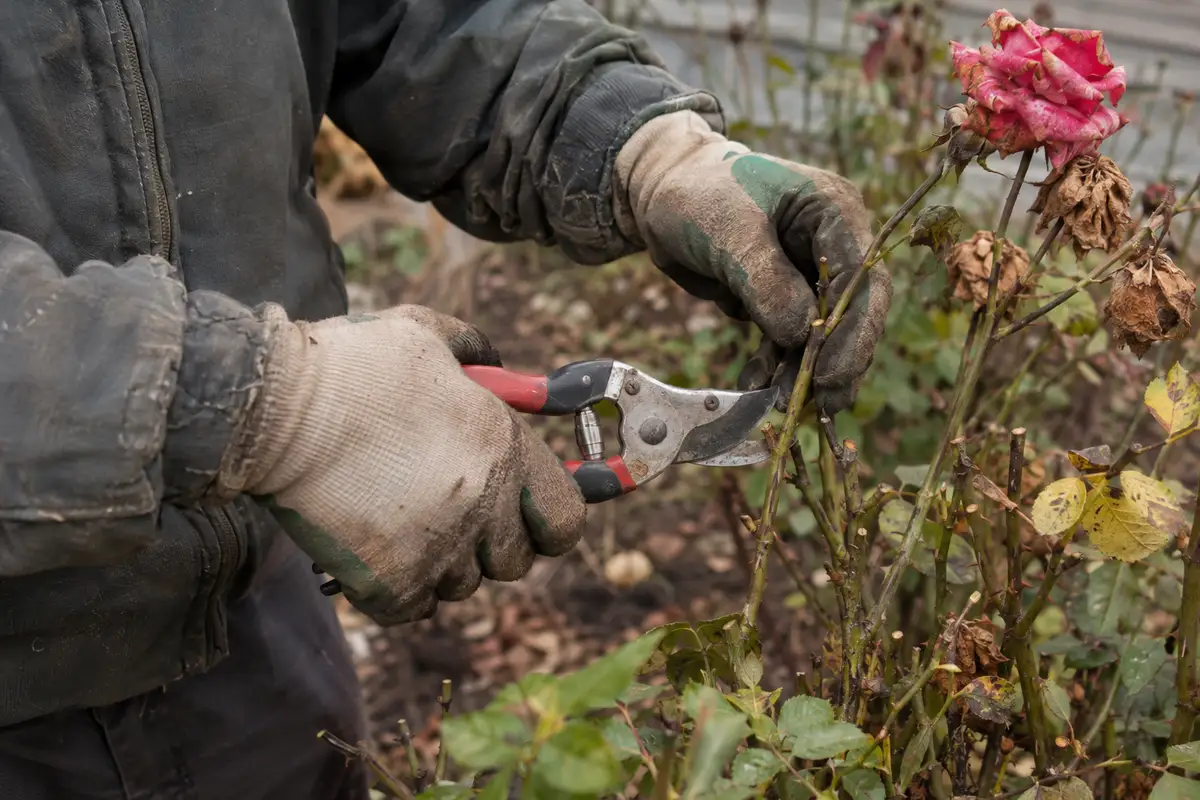
We use sharp bypass pruners and cut about a quarter inch above an outward-facing bud, sloped away from the bud so water runs off. Loppers or a small saw take out thick old canes at the base.
Yes, we wipe or dip our blades in rubbing alcohol or a bleach solution, especially after cutting a plant that shows disease.
No, not usually, unless cane borers are a problem in your beds.
Yes, for repeat bloomers, since they flower on new growth and our spring cuts push strong new canes. For once-bloomers we prune after flowering, so next year's buds aren't cut off.
Yes, with sharp bypass pruners, thick gloves, and the right timing for your type of rose. The mistakes we see most are once-bloomers cut in spring, long stubs, and weak plants cut too hard.
Yes, we can bag and haul away the canes, which some jobs price as a small extra. Diseased material always goes off site rather than into your compost.
Water deeply if the soil is dry, keep 2 to 3 inches of mulch around the bushes but off the canes, and start feeding when new growth begins.
